11 DISCOs · no account · no charge

Check your electricity bill online in Pakistan

Type the reference number printed on your last bill and the duplicate opens straight away — MEPCO, LESCO, FESCO, IESCO and every other distribution company. View it, download it, print it, pay from it.

Source
Official PITC billing path
Cost
Free, no registration
You need
A 10–14 digit reference number
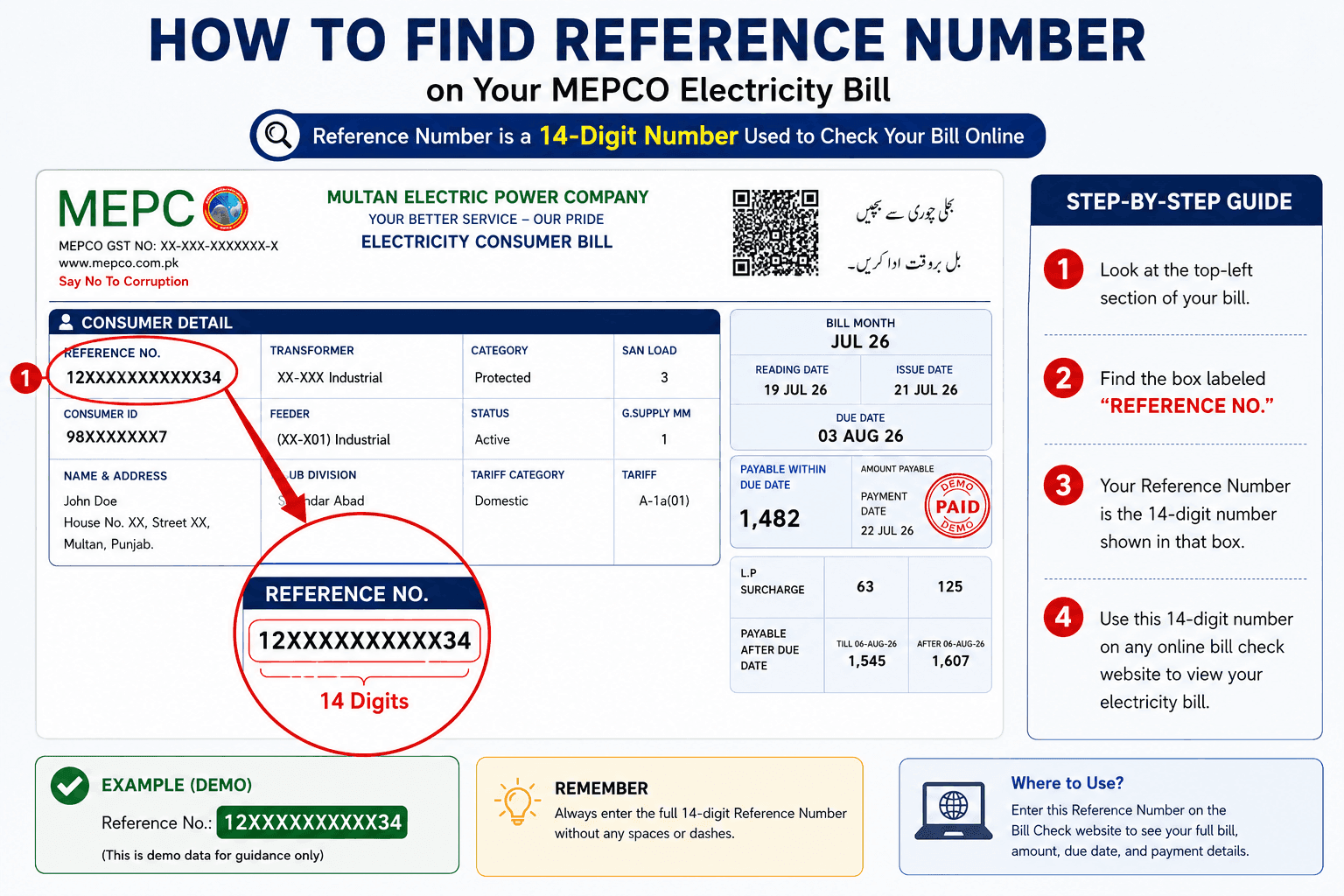
Find your reference number

Look at the top-left of any electricity bill you have. The 10–14 digit number printed there — labeled “Reference No.” — is all this site needs. It stays the same even if you change tenants.

Enter the number and pick your DISCO

Type the reference number into the search box above, then choose your distribution company — MEPCO, LESCO, FESCO, IESCO, or any of the other 11 DISCOs connected to Pakistan's central PITC billing system.

Read, print, or pay from your bill

Your official duplicate opens directly from PITC — the same document your DISCO holds. Use it to verify the amount due, check the due date, print it for a bank or landlord, or pay with JazzCash, Easypaisa, or your bank app.

Troubleshooting

Why did my electricity bill suddenly go up?

Six real causes — not vague advice. Check them in order before calling your DISCO.

  • A higher FPA this month

    NEPRA approves a monthly Fuel Price Adjustment based on what the generators actually spent on fuel. A high FPA month adds a per-unit surcharge to every consumer's bill — your usage may be identical but the total still rises.

  • You crossed a slab boundary

    Pakistan uses a progressive tariff. Crossing 100, 200, or 300 units moves you into a higher rate band — not just on the extra units, but on all the units in that band. Going from 195 to 210 units in a summer month typically costs far more than 15 extra units suggest.

  • Arrears carried forward

    If a previous bill was only partially paid, or a payment was not posted in time, the outstanding balance appears as arrears on the next bill. The current month's consumption is unchanged — the spike is last month's gap resurfacing.

  • You lost protected status

    Consumers who use 200 units or less for six consecutive months are "protected" and pay lower slab rates. Exceeding 200 units in any one of those months removes that status for the next six bills — the difference in rates can be significant.

  • Estimated reading corrected

    When a meter reader cannot access a property, DISCOs record an estimated reading. The next physical reading catches up all the uncounted units at once — creating a one-off high bill that is technically correct but feels like a spike.

  • Seasonal load increase

    Air conditioning in summer and water heating in winter are the two biggest seasonal drivers. Running one split AC for an extra 4–6 hours a day through a hot billing cycle can push a household from one slab tier to the next.

Full troubleshooting guide →

Quick answers

Common electricity bill questions, answered

Concise, verified answers to the questions Pakistani consumers ask most.

How do I check my electricity bill online in Pakistan?
Enter the 10–14 digit reference number from your printed bill above, select your distribution company (MEPCO, LESCO, FESCO, etc.), and click "Open bill". Your official duplicate bill loads directly from PITC in seconds — no account required.
Where is the reference number on my electricity bill?
The reference number is a 10–14 digit numeric code printed at the top-left of your electricity bill, near your name and address. It may be labeled "Reference No." or "Consumer Reference". It belongs to your meter, not to you, so it stays the same even if you move.
Which electricity companies can I check on CheckBills.net?
All 11 DISCOs connected to Pakistan's PITC billing system: MEPCO, LESCO, FESCO, IESCO, GEPCO, PESCO, HESCO, SEPCO, QESCO, TESCO, and HAZECO. K-Electric (Karachi) is not on the PITC network and cannot be checked here.
What is FPA on my electricity bill?
FPA stands for Fuel Price Adjustment. It is a monthly per-unit charge (or credit) approved by NEPRA that reflects the actual cost of fuel used to generate electricity that month versus the reference cost built into the base tariff. It can raise or lower your bill independently of how many units you used.
What is a protected consumer in Pakistan electricity billing?
A protected consumer is a domestic (residential) user whose monthly electricity consumption has not exceeded 200 units in any of the previous six billing months. Protected consumers pay lower per-unit slab rates and are generally exempt from FPA on the first 50 units — a NEPRA-determined benefit for low-income households.
How can I pay my electricity bill in Pakistan?
You can pay using JazzCash (in-app or *786#), Easypaisa, any major bank's mobile app (HBL, UBL, Meezan, MCB, Allied), ATMs, or in person at your DISCO's office or a Pakistan Post branch. Your reference number is the only identifier every channel needs.

More problems & answers →

Tariff reference

How domestic electricity slabs work in Pakistan

Pakistan uses a progressive slab tariff set by NEPRA — the per-unit rate rises as monthly consumption increases. Key thresholds every household should know:

Domestic (A-1) tariff slab thresholds — indicative structure
Monthly units (kWh)Consumer typeKey effect
1 – 50Protected (lifeline)Lowest rate, generally FPA-exempt on these units
51 – 100ProtectedLow rate; slab benefit still applies
101 – 200Protected / UnprotectedCrossing 100 units triggers slab benefit removal for unprotected consumers
201 – 300UnprotectedHigher per-unit rate; exceeding 200 ends protected status for 6 months
301 – 700UnprotectedProgressively higher slab rates; summer AC usage typically lands here
700 +UnprotectedHighest domestic slab rate applies to all units above threshold

Exact per-unit rates are set by NEPRA and revised periodically. Check your official duplicate bill for the exact rate applied to your account. Full tariff & slab guide →

Key facts

Pakistan electricity billing — facts at a glance

  • Pakistan has 11 DISCOsDistribution companies covering all provinces: MEPCO, LESCO, FESCO, IESCO, GEPCO (Punjab), PESCO, HAZECO, TESCO (KPK), HESCO, SEPCO (Sindh), QESCO (Balochistan).
  • PITC generates every DISCO billThe Power Information Technology Company (PITC) at bill.pitc.com.pk is the central system behind all DISCO bills. CheckBills.net queries this same system.
  • FPA changes every monthNEPRA approves a monthly Fuel Price Adjustment based on CPPA-G fuel cost data. A high FPA month can add hundreds of rupees to an otherwise identical bill.
  • 200 units is the protected thresholdDomestic consumers who stay at or below 200 units for 6 consecutive months are classified as "protected" and receive lower NEPRA slab rates.
  • Reference numbers are meter-tiedYour 10–14 digit reference number belongs to the meter installation, not to you personally. An old receipt from years ago typically still works for looking up your bill.
  • JazzCash and Easypaisa work on basic phonesBoth mobile wallets accept electricity bill payments via USSD (*786# for JazzCash) — no smartphone or internet required, only a reference number and mobile credit.

Where we stand

What this tool is, and what it isn't

Your bill belongs to your distribution company. This site is a shortcut to reading it — nothing more, and we would rather say so plainly than imply otherwise.

Nothing is recalculated

The document you see is what PITC returned for your reference number. We do not recompute slabs, restate an amount or adjust a due date — if a figure looks wrong, it is wrong on the official record and belongs with your DISCO.

No account, no gate

No sign-up, no password, no subscription that starts free. A reference number and a connection are the whole requirement, on a patchy mobile signal as much as on fibre.

Context beside the number

A total on its own explains nothing. FPA, slab boundaries and the payment routes are written up here so you can tell an ordinary month from one worth querying.

How it works

One number in, the real bill out

No queue at the subdivision office, no waiting for the paper copy that never arrived.

A duplicate bill retrieved by reference number

The duplicate, in seconds

Same line items, same reference, same amount as the printed original. Print it, or save the PDF for a bank, a landlord or your own records.

Monthly usage compared against slab boundaries

Built for the phone first

The bill scales to the screen instead of making you pinch and drag across a desktop-width page. Nothing to install.

No tracking or advertising scripts on the page

Nobody is watching you read it

No advertising network, no analytics script, no tracking cookie. The only outside request a page makes is the one that fetches your bill from PITC.

Reading the bill

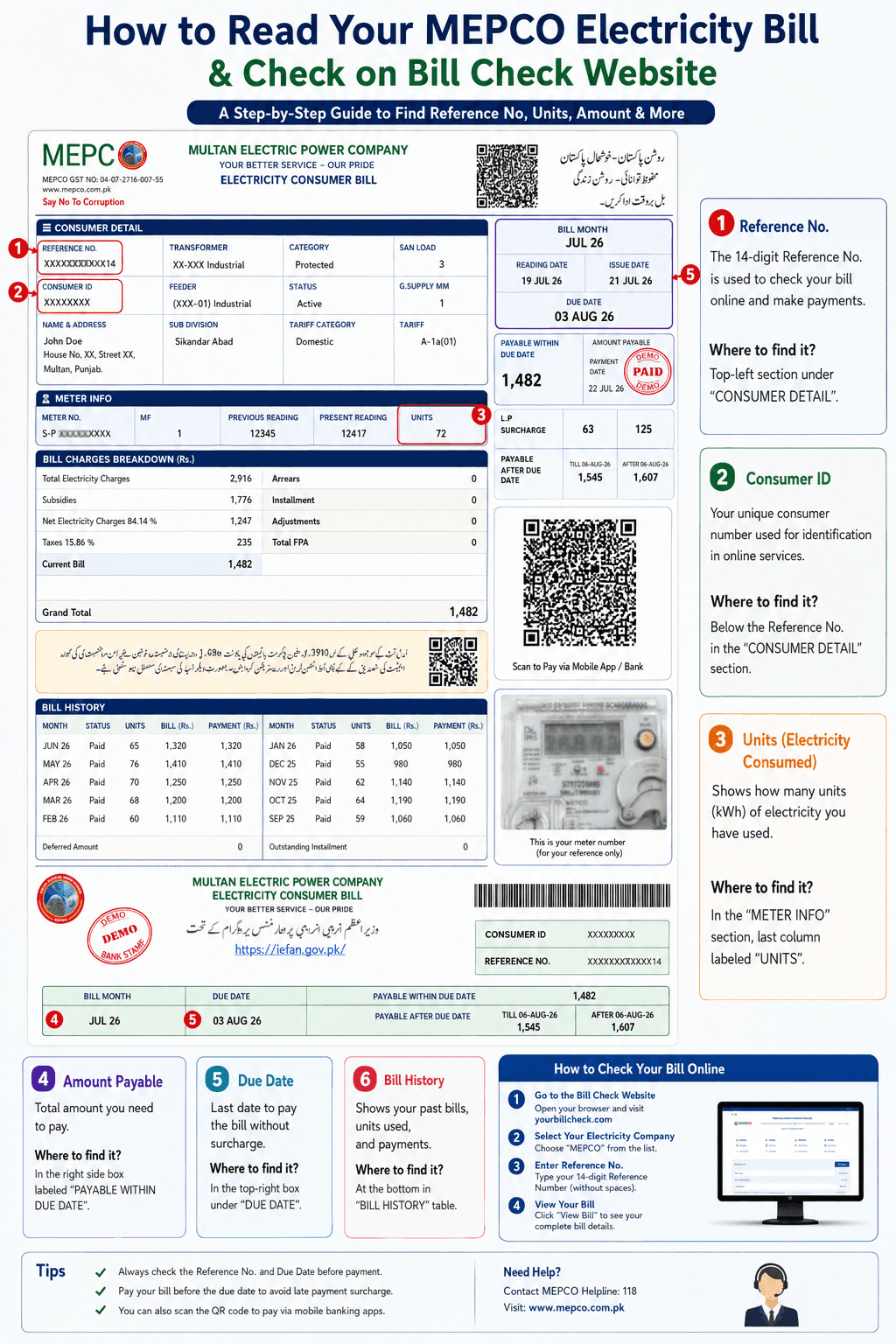
What every line on your bill means

Nine fields explain almost any total. These are the ones worth checking before you decide a bill is wrong.

  • Reference number

    The 10–14 digit identifier for your meter, printed top-left. It belongs to the connection, not to you, so it survives a change of tenant.

  • Previous & current reading

    The two meter figures this bill is calculated from. Their difference, times any multiplier, is your units.

  • Units consumed

    Total kWh for the cycle. This single number decides which slab you land in, so it is the first thing to compare month to month.

  • Tariff & slab category

    Domestic, commercial, industrial or agricultural — and within domestic, protected or unprotected. It sets the rate applied to every unit.

  • FPA / Fuel Price Adjustment

    NEPRA's monthly correction for what generation actually cost. It moves independently of your usage and can be a credit.

  • GST, TV fee & surcharges

    Government levies stacked on the energy charge: sales tax, the PTV fee, the Financing Cost surcharge and TRS where it applies.

  • Meter rent

    A small fixed charge for the meter hardware. It does not move with consumption — the same figure appears every month.

  • Arrears

    Anything unpaid from an earlier cycle, carried forward. A sudden jump with flat usage is often this rather than a rate change.

  • Due date & the after-due amount

    Two figures, not one. The second includes the Late Payment Surcharge and applies the moment the first date passes.

Something here not matching your own bill? Work through the common causes before you queue at the subdivision office.

Once you have the amount

Where to actually pay it

We do not take payments — the reference number is all any of these channels needs.

Full payment guide

Mobile wallets

JazzCash and Easypaisa, in-app or on *786# from a basic handset.

Bank apps

HBL, UBL, Meezan, MCB, Allied and most others carry a bill-payment section.

ATM & branch

Bill payment at the ATM menu, or over the counter with cash.

DISCO & post office

Your own subdivision office and many Pakistan Post branches accept payment.

Keep the transaction ID until the payment shows on next month's bill — it is the only quick proof you have if one goes astray.

How to check electricity bill

Simple 4 Steps

How to Check Your Electricity Bill

  • 1Find your Reference Number — the 10–14 digit code at the top of your printed bill.
  • 2Select your DISCO — choose MEPCO, LESCO, FESCO or any other company.
  • 3Click "Check Bill" — your official duplicate bill loads instantly.
  • 4Print or Save — download as PDF for bank payments or personal records.

Read the full guide →

Expert Guides

Bill Guides & Articles

Everything you need to understand, manage, and reduce your electricity bills.

Bill guides

View all guides → · Resources · Problem solving · Bill calculator

FAQ

Frequently Asked Questions

Quick answers about checking electricity bills in Pakistan.

How do I check my electricity bill online in Pakistan?

Enter the 10–14 digit reference number from your last printed bill, choose the company that supplies you — MEPCO for Multan, LESCO for Lahore, and so on — and submit. The duplicate opens from the PITC portal, ready to read, print or save as a PDF. There is no account to create.

Can I check my electricity bill without a reference number?

Not through PITC, and therefore not here — the lookup is built entirely around that number. You can recover it from any earlier bill, from your DISCO's billing SMS, or by calling customer care and verifying the account. It is 10 to 14 digits, printed under 'Reference No.' or 'Consumer Reference'.

Can I download and print my duplicate electricity bill?

Yes. Once the bill is on screen, print it the way you would any page — Ctrl+P on a computer, or the share/print item in your mobile browser's menu — and choose 'Save as PDF' if you want the file rather than paper.

Is CheckBills.net an official government website?

No. This is an independent tool that fetches your bill from the official PITC portal and shows it unaltered. We are not WAPDA, NEPRA, PITC or any DISCO. Anything touching your actual account — an outage, a disputed amount, a meter that looks wrong — has to go to your distribution company.

How fast does a bill check take?

Normally a few seconds. The limiting factor is PITC's own server, which gets slow around billing dates. If nothing comes back, re-read the digits against your printed bill before retrying — one wrong figure returns an empty result rather than an error.

Which electricity companies are supported on CheckBills.net?

All eleven DISCOs on the PITC platform: MEPCO (Multan and south Punjab), LESCO (Lahore), FESCO (Faisalabad), IESCO (Islamabad and Rawalpindi), GEPCO (Gujranwala), PESCO (Peshawar and KPK), HESCO (Hyderabad and lower Sindh), SEPCO (Sukkur and upper Sindh), QESCO (Quetta and Balochistan), TESCO (tribal districts) and HAZECO (Hazara and Abbottabad).

Does CheckBills.net support K-Electric (Karachi) bills?

No. K-Electric bills on its own system, entirely separate from PITC, so no reference number entered here would reach it. Karachi consumers use ke.com.pk with their 13-digit consumer number.

What is the difference between WAPDA and my DISCO?

Habit, mostly — people call any electricity bill a 'WAPDA bill'. In practice the document is issued by your distribution company: MEPCO, LESCO, FESCO or whichever serves your area. WAPDA sits above them as the parent authority, but the bill is a DISCO document produced through PITC.

What is FPA (Fuel Price Adjustment) on my electricity bill?

The monthly correction NEPRA applies for what generation actually cost — furnace oil, coal, imported LNG. It can add to the bill or, less often, credit it. FPA is the standard reason a bill moves while the units consumed stay flat.

Why is my electricity bill higher than usual?

Work through it in order: did the units go up (cooling in summer, heating in winter)? Did consumption cross a slab boundary, so the extra units cost more than the earlier ones? Was FPA positive this month? Are there arrears carried over, or a late surcharge? Comparing the units-consumed and FPA lines against last month's bill settles most cases in a minute.

What is a slab rate on my electricity bill?

A stepped price ladder. Each band of monthly units is charged at a higher rate than the band below, so the bill rises faster than consumption does. Staying at or under 200 units keeps a household in the protected, subsidised category — which is why watching your units matters more near a boundary than anywhere else.

What are peak hours and off-peak hours on my bill?

They apply only if you have a Time-of-Use meter. On one, roughly 7 PM to 11 PM is charged at the higher rate and everything else at the lower. Running the AC, iron or washing machine outside that window is where TOU consumers save. On a standard meter, timing makes no difference.

What is a protected vs unprotected consumer?

Protected means 200 units a month or fewer and NEPRA's subsidised slab rates. Above that you are unprotected and billed at the full rate, and the difference is significant. Your bill states which category applies to you.

Can I pay my electricity bill through CheckBills.net?

No — this site displays bills and does not handle payments. Take the reference number to JazzCash, Easypaisa, your bank app, an ATM or an authorised counter. That number is the only thing any of those channels needs.

How do I pay my electricity bill using JazzCash or Easypaisa?

Open the app, go to bill payment, select your DISCO, enter the reference number and check the amount against the bill before confirming. Without a smartphone, *786# runs the same flow over USSD. Keep the transaction ID until the payment appears on your next bill.

What is the difference between previous and current meter readings?

Both are printed on the bill. The gap between them, adjusted by any meter multiplier, is the units consumed for that cycle. If either figure looks wrong, that is a matter for your DISCO — we show what PITC returns and cannot amend a reading.

What is Late Payment Surcharge (LPS) on my bill?

The penalty applied once the due date passes. It is why the bill quotes two amounts — one payable in time, a higher one after. Pay against the first and the second never comes into play.

How do I save my duplicate bill as a PDF?

With the bill on screen, open your browser's print dialog (Ctrl+P, or the share menu on a phone) and pick 'Save as PDF' in place of a printer. The file is identical to what PITC produced, which is what banks, landlords and offices are usually asking to see.

Can I check bills for commercial or industrial connections?

Yes — the lookup is the same, provided you have that connection's reference number. What differs is the bill itself: commercial and industrial tariff categories (B-1, B-2, C-1, D-1) carry different rates and tax treatment from a domestic account.

I lost my old bill — how do I find my reference number?

Try in this order: billing SMS from your DISCO, payment receipts in JazzCash or Easypaisa, your bank's transaction history, then the subdivision office. Because the number belongs to the meter, an old receipt from years back is usually still valid.

How often is my electricity bill issued?

Monthly for most households, though the cycle can vary by area and account type. The billing month and issue date printed on the statement define exactly what period you are being charged for.

What is NEPRA and why does it affect my bill?

NEPRA is the national electricity regulator. It sets the slab structure and signs off the FPA, TRS and other mandated surcharges that appear on your bill, and it issues quarterly tariff determinations. When the rate changes without your usage changing, a NEPRA decision is usually behind it.

Who do I contact for outages, wrong readings, or billing disputes?

Your DISCO, on the helpline printed on the bill — MEPCO on 080066006, LESCO on 111-000-118, and so on. If the matter stalls there, PMDU and NEPRA's consumer complaint portal are the escalation routes. We have no access to account or metering records and cannot intervene.

The long version

How billing actually works in Pakistan

Ten things worth understanding about the document you just opened — where it comes from, what sets the number, and who to go to when it looks wrong.

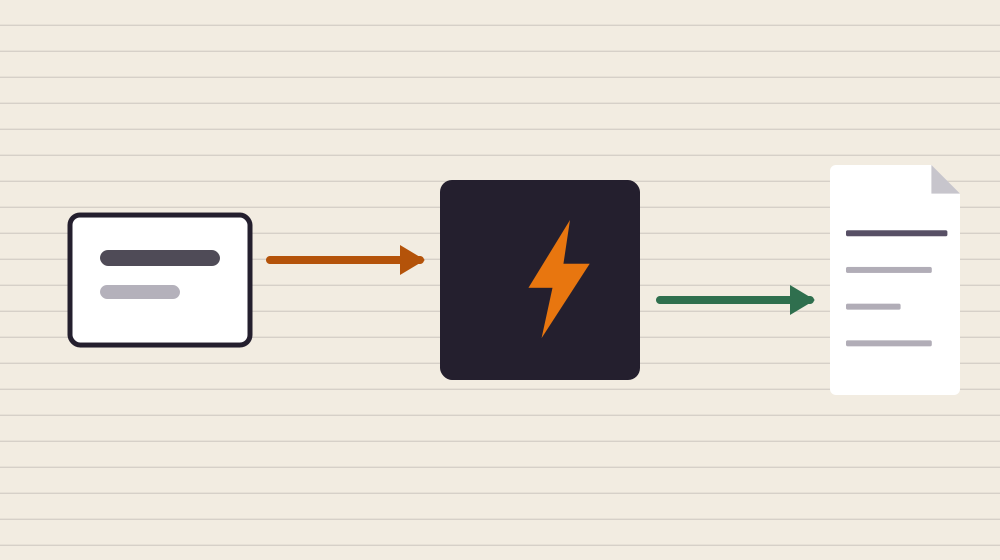
A reference number sent to the PITC system, returning an official bill

01

WAPDA electricity bill check online, without the paperwork

Almost everyone in Pakistan still says WAPDA bill, but the document that lands at your door is issued by a distribution company and generated centrally by PITC, the Power Information Technology Company. That central system is what this page talks to. Put in the reference number and you get the same duplicate bill the counter at your sub-division office would hand over — the real electricity tariff applied to your meter, the arrears if there are any, the FPA for the month and the due date you actually have to meet. A tube-well account and a house in a 5-marla street go through exactly the same lookup.

A duplicate bill located by its reference number

02

Getting the duplicate bill from a reference number

One field does it. The reference number is 10 to 14 digits, printed at the top of any bill you have kept; a few regions print a shorter consumer number beside it. There is no account to open and no password to lose. Once the bill is on screen, your browser's print dialog will save it as a duplicate PDF or push it to a printer, and that copy is what banks — HBL, UBL, Meezan, Allied — post offices and the mobile wallets all work from. Landlords, employers and tax filings generally accept it for the same reason: it is the official document, not a reconstruction.

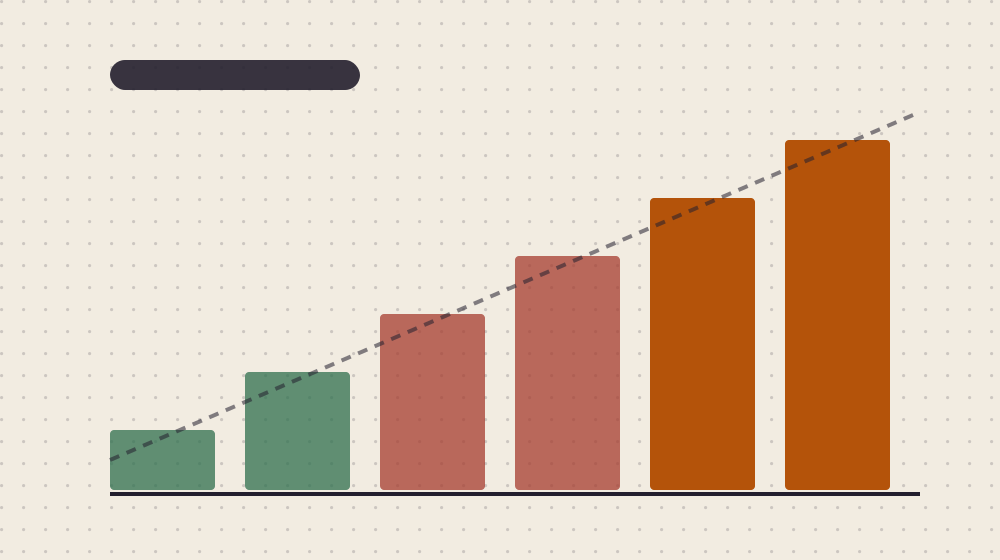
Stepped tariff bands rising with monthly units consumed

03

Slab rates, NEPRA tariffs and why the total moves

What you pay per unit is set by NEPRA, and it is not one flat number. The tariff is banded: the first units cost less than the last ones, with the breaks that matter falling around 100 and 200 units consumed for domestic accounts. A household that stays at or under 200 units a month is treated as protected and billed at subsidised rates; going over moves you to the unprotected schedule and the jump is bigger than the extra units alone suggest. On top of that, anyone with a TOU smart meter pays more during peak hours in the evening than off-peak. Between the slab structure, the monthly FPA and the quarterly tariff revisions, three separate things can move your bill in a month when your habits have not changed at all.

Eleven distribution company tiles

04

Every DISCO on the PITC platform

Eleven distribution companies, covering the whole country outside Karachi. In Punjab that is MEPCO (Multan, Bahawalpur, Dera Ghazi Khan), LESCO (Lahore, Kasur, Okara), FESCO (Faisalabad, Sargodha, Jhang), GEPCO (Gujranwala, Sialkot, Gujrat) and IESCO (Islamabad, Rawalpindi, Attock). In Khyber Pakhtunkhwa, PESCO (Peshawar, Mardan, Swat), HAZECO across Hazara and TESCO in the tribal districts. Sindh is served by HESCO (Hyderabad, Nawabshah) and SEPCO (Sukkur, Larkana), and Balochistan by QESCO (Quetta, Gwadar, Sibi). Karachi is the exception — K-Electric bills on its own system and cannot be looked up here or anywhere else outside ke.com.pk.

A bill with its charge lines itemised down the right side

05

The charges underneath the total: FPA, GST, TV fee and the rest

Very little of a Pakistani electricity bill is the plain cost of the units. The line that moves most is FPA — Fuel Price Adjustment, sometimes written FCA — which tracks what furnace oil, coal and imported LNG actually cost the generators that month, and which can be a credit as easily as a charge. Around it sit the PTV TV fee, GST as a percentage, the Financing Cost surcharge, meter rent where it applies, and income tax for commercial and industrial accounts. Your duplicate shows all of them broken out, along with the previous and current meter reading, the issue date and the billing month — which is the fastest way to work out whether a surprising total came from your usage or from a policy line.

Generation, transmission, distribution and household in sequence

06

Who does what: DISCOs, CPPA, NEPRA and the WAPDA name

The chain behind the bill is longer than most people need to care about. Generation companies produce the power, the transmission network moves it, the CPPA handles the purchasing arrangements that feed into tariff and adjustment mechanics, NEPRA regulates and sets the rates, and your DISCO delivers the electricity and issues the bill. WAPDA is the older parent name that stuck in everyday speech. It is worth knowing the vocabulary only because tariff notices and news coverage use it — day to day, the job is smaller: find the reference number, check the units, watch the slab, pay before the due date.

A document passed through unchanged and check-marked

07

What we do and do not do with your bill

PITC decides how a web bill renders; we pass your reference through and show the result. Nothing is estimated here — not the unit price, not the slab arithmetic, not the arrears. That matters when the document has to satisfy someone else, because what you print carries the same structure and the same figures as the copy your DISCO holds. It also sets the boundary: if a reading is wrong, we cannot fix it, and the honest answer is to take it to your distribution company rather than to a third-party site.

A bill with its key fields called out

08

Reference number, consumer number, and what else is on the sheet

The reference number is the key to every bill check online lookup, and because it belongs to the meter rather than to you, an old receipt from years ago usually still works. Bills also carry the feeder name, the sub-division and the connection type — single-phase or three-phase. Households can mostly ignore the rest and watch kWh and slab tier, especially through the seasonal swings when cooling or heating is running. Commercial and industrial consumers have more to read: maximum demand, power factor, and separate time-of-use registers.

One reference number fanning out to four payment channels

09

Paying: wallets, bank apps, ATMs and counters

Once you have the amount, the reference number is the only thing any payment channel asks for. JazzCash and Easypaisa cover most of the country, including over *786# on a basic handset; NayaPay and SadaPay work the same way; every mainstream banking app has a bill-payment section; and ATMs and post office counters still take cash against the number. Whichever route you use, keep the transaction ID until the payment shows up on the following month's bill — that receipt is the only quick evidence you have if a payment goes astray.

A consumption line trending downward

10

Cutting the bill: timing, hardware and the slab boundary

If you are on a TOU meter, moving flexible load out of the evening peak hours — water heating, laundry, a second air conditioner — is the cheapest change available, because it costs nothing but attention. Everything else is about reducing baseline units consumed: inverter cooling instead of conventional, LED lighting, and insulation or shading where the heat is actually getting in. The reason it pays to know roughly where your monthly total lands is the slab rate structure — a household hovering just above a boundary gets back more than the units saved, and is far less exposed when FPA rises.

Many differently-worded searches converging on one lookup

11

MEPCO, LESCO, QESCO — the same task under different names

People arrive here searching for a MEPCO bill, a LESCO duplicate bill, a FESCO online bill, an IESCO bill check, a PESCO bill by reference number, GEPCO bill online, HAZECO, a HESCO duplicate, a SEPCO bill, QESCO bill check online or a TESCO bill — and behind every one of those phrasings is a single task: retrieve the official duplicate for a valid reference number. The neighbouring questions are just as common. What is the unit rate now, what are the fixed and minimum charges, why did a late payment surcharge appear, when is the load shedding on this feeder, how does net metering paperwork go, is solar worth it at these tariffs. We answer what can be answered accurately — the bill itself, and how tariff, slabs, FPA and peak hours show up on it — and point you at your DISCO for anything that requires access to your account.

Full indexEvery page on this site344 pages, grouped by what they are for

Have your reference number handy?

That is all it takes. Scroll back up and enter it, or pick your distribution company from the list first.